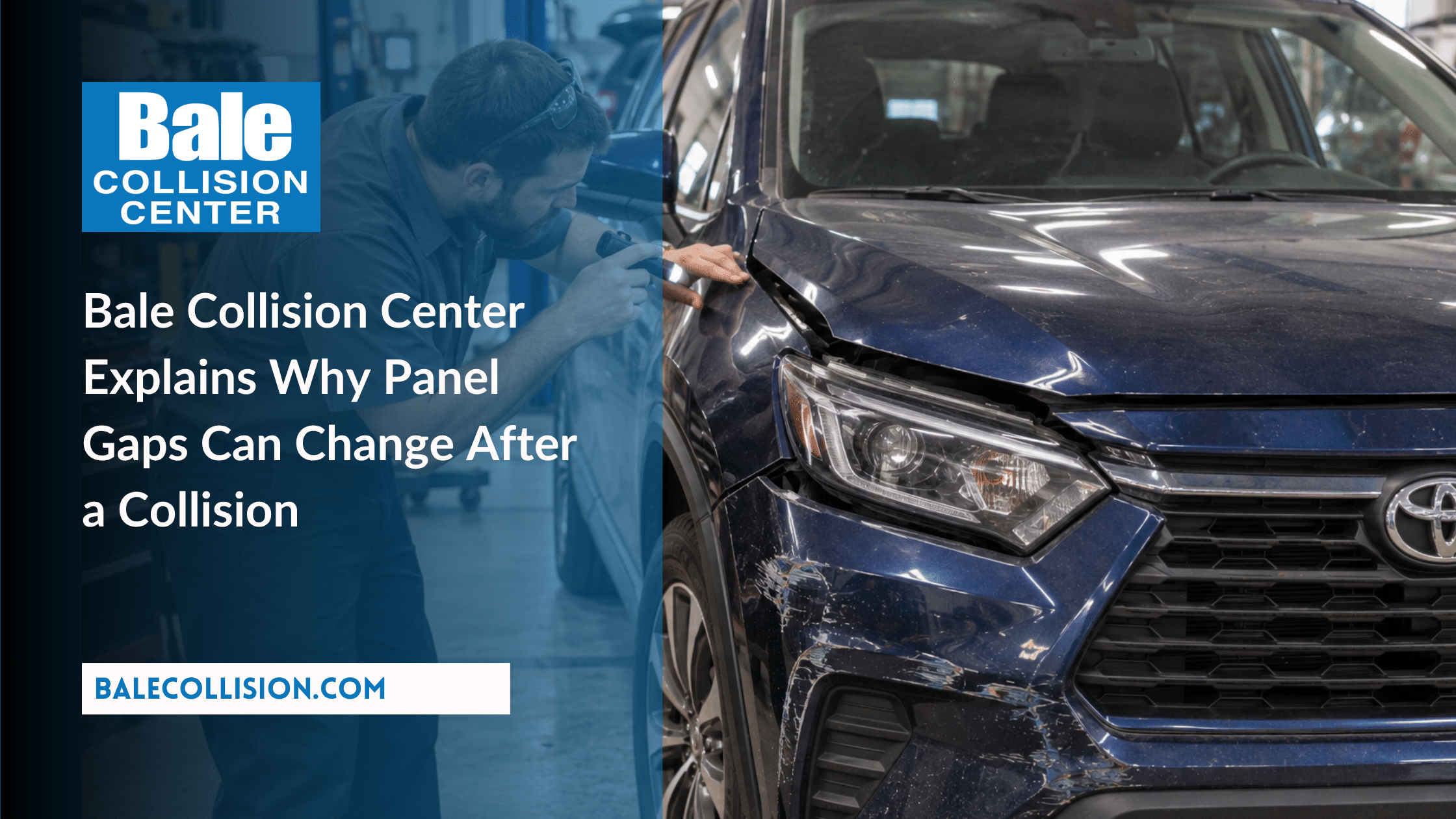
Bale Collision Center Explains Why Panel Gaps Can Change After a Collision
Little Rock, AR - October 28, 2026 - PRESSADVANTAGE - Bale Collision Center has published consumer guidance explaining
Press Release Disclaimer: This is a press release distributed through the XPR Media network. It has not been independently verified by our newsroom.

Little Rock, AR – October 28, 2026 – PRESSADVANTAGE –
Bale Collision Center has published consumer guidance explaining how changes in vehicle panel gaps can help identify areas that warrant closer evaluation after a collision. The October publication focuses on a specific distinction for vehicle owners: an uneven gap is an observable symptom, while determining what caused the change requires inspection of the affected panel, its attachment points, and adjoining components.
The guidance expands on Bale Collision Center’s auto body repair information by addressing panel fit as a separate part of post-collision evaluation. It outlines three potential sources of changed alignment: deformation of the exterior panel, movement or damage involving mounting components, and changes elsewhere within the connected collision area.
Doors, hoods, trunk lids, liftgates, fenders, bumpers, and lamps are positioned in relation to neighboring components. The spacing between them varies by vehicle and location, but a collision can alter those relationships by changing the shape or position of one or more parts.
Drivers may first notice a hood with different spacing from side to side, a door that sits inward or outward compared with an adjoining panel, or a trunk lid that no longer appears centered within its opening. Panels may also begin rubbing or require more effort to open, close, or latch.
The October guidance explains that these observations can help identify where technicians should begin evaluating the damaged area, but they do not establish the underlying cause.
Panel deformation is one possibility. Collision forces can change the shape of a hood, door, fender, trunk lid, or other component enough to affect its relationship with surrounding parts. The extent of visible denting does not necessarily indicate how much the component’s position has changed.
Attachment and operating components provide a second potential source. Hinges, brackets, retainers, fasteners, latches, and mounting points help establish the position of exterior components. Damage to one of these areas can produce an alignment change even when the visible surface of the adjoining panel has relatively limited damage.
This can be particularly noticeable with movable panels. A door may continue to operate while no longer sitting flush with the surrounding body. A hood may latch while appearing higher along one side. A trunk lid or liftgate may require additional closing effort after a rear impact.
The third consideration is the surrounding collision area. Front-end impacts can involve a hood along with fenders, headlights, bumper components, and associated mounting areas. Rear impacts can affect a trunk or liftgate together with quarter panels, lamps, bumper components, and adjoining rear body areas.
Bale Collision Center’s collision repair information provides additional context about evaluating connected collision damage when developing a repair plan.
When the source of an alignment change is not visible from the exterior, disassembly can provide access to brackets, attachment locations, and other components concealed behind the damaged area. Depending on the location and extent of the collision, vehicle-specific measurements or specifications may also be relevant to the evaluation.
The publication emphasizes that an uneven panel gap does not independently establish structural damage. A damaged exterior panel, hinge, bracket, fastener, mounting point, or adjoining component can also alter fit. Inspection helps determine which condition is responsible rather than assigning a cause based on appearance alone.
Repair sequence can become important when several connected components have been damaged. Underlying or mounting areas may need to be addressed before final adjustments are made to adjoining exterior panels. When replacement components are required, their position can likewise be checked in relation to the surrounding vehicle during installation.
Manufacturer repair information can provide additional direction for the components involved. Vehicle construction varies among models and can include steel, high-strength steel, aluminum, plastics, and other materials, each with repair considerations that may affect how damaged areas are restored.
Changes in operation can provide vehicle owners with additional information to document after an accident. A component that begins rubbing, requires unusual effort to close, no longer latches normally, develops wind noise or water intrusion, or sits differently from surrounding panels can be included in the collision evaluation.
The newly published October guidance differs from broader collision-repair information by concentrating specifically on the diagnostic value and limitations of visible panel spacing. Its central point is that a changed gap identifies a relationship between components that has changed, but inspection is needed to determine whether the source is the panel itself, its attachment points, or another part of the collision area.
That distinction gives consumers a more precise way to interpret an alignment change without assuming that it proves a particular type or severity of damage.
The publication is available alongside information about Bale Collision Center’s Downtown Little Rock facility, located at 100 N Cross St.
Bale Collision Center is a family-owned collision repair business that has served the Little Rock community since 1952. The company provides collision repair, auto body repair, automotive paint and refinishing, paintless dent repair, glass replacement, and ADAS services through its two Little Rock locations. Its Downtown facility is located at 100 N Cross St, Little Rock, AR 72201.
###
For more information about Bale Collision Center, contact the company here:
Bale Collision Center (Downtown)
Jason Spiller
(501) 375-0910
jspiller@baleautomotive.com
100 N Cross St, Little Rock, AR 72201, United States